
Convert fencing phone calls to bookings fast
Learn to convert fencing phone calls to bookings fast! Boost your revenue by mastering the call-to-appointment process. Get started now!
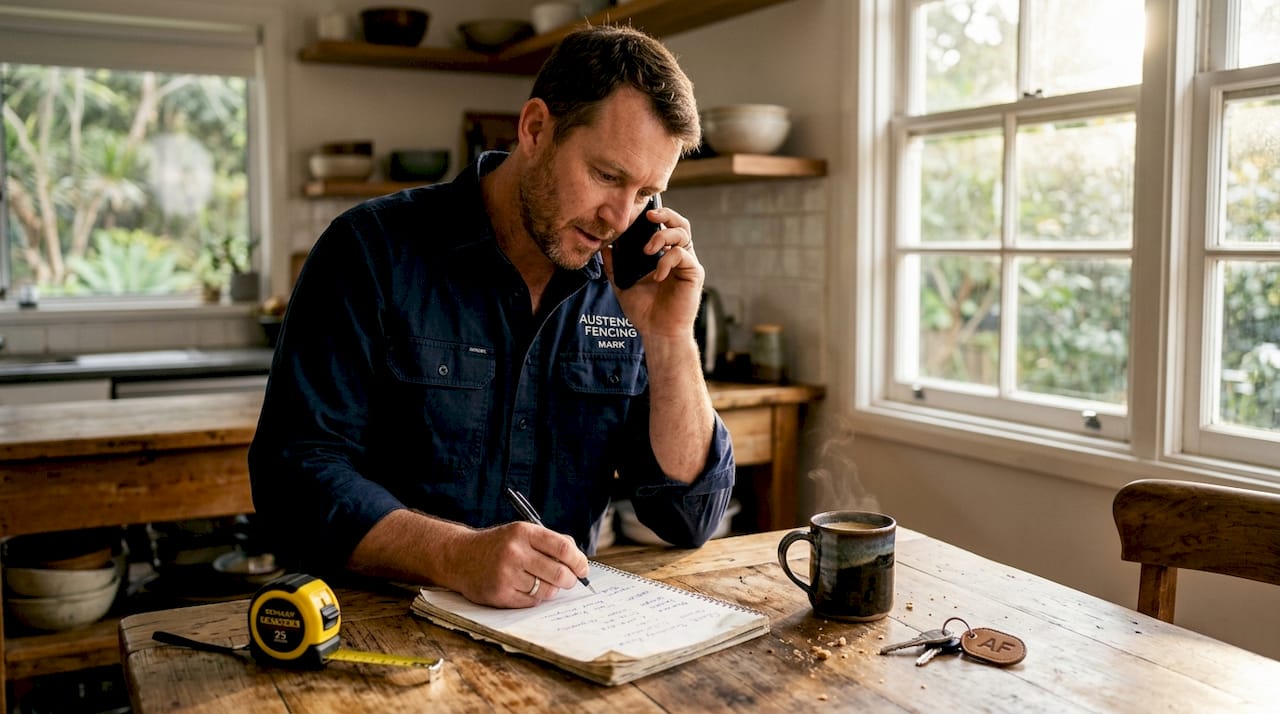
Convert fencing phone calls to bookings fast
You’re on the tools, post is going up nicely, and your phone rings. You miss it. By the time you call back an hour later, the customer has already booked someone else. If that scenario sounds familiar, you are not alone. Converting fencing phone calls to bookings is one of the biggest revenue leaks in small construction businesses, and it rarely comes down to lead quality. It comes down to process. This guide walks you through exactly what to fix, from how you answer the phone to the systems that do it for you when you can’t.
Table of Contents
Understanding the problem: why fencing phone calls often fail to convert
Preparing your fencing business for phone-to-booking conversion success
Executing an effective phone call process to maximise bookings
Verifying and optimising your phone-to-booking conversion process
Rethinking the human-AI balance to boost fencing bookings
How AI voice agents can transform your fencing business bookings
Frequently asked questions
Key Takeaways
Point | Details |
|---|---|
Reduce scheduling friction | Making booking easy and immediate after a call greatly improves conversion rates. |
Respond quickly | Contacting callers within five to six minutes increases the chance of securing a booking significantly. |
Use AI as a safety net | An AI receptionist catches missed calls but does not replace the personalised service of a live answer. |
Monitor key metrics | Tracking conversion, show, and response rates helps optimise appointment settings systematically. |
Maintain AI regularly | Updating AI scripts monthly ensures callers get current and relevant information every time. |
Understanding the problem: why fencing phone calls often fail to convert
Most fencing contractors assume they lose jobs because of price. The reality is more frustrating than that. A large chunk of enquiries never become bookings simply because the phone call to appointment process breaks down before a quote is even discussed.
The median qualified-to-booked rate for inbound leads sits at 62%, while top performers hit 78% or higher by reducing scheduling friction after that first contact. That gap is not about having better leads. It is about what happens in the minutes after someone picks up the phone to call you.
Here are the most common reasons fencing enquiries fall through the cracks:
Missed calls with no fallback. If a call goes to voicemail, most residential customers simply ring the next contractor on the list.
Slow call-back times. Waiting hours to return a call is enough to lose a warm lead entirely.
No clear booking path. Callers who cannot book on the spot often forget to follow up.
Undertrained staff. A receptionist or admin who cannot answer basic fencing questions or offer a booking immediately creates doubt in the caller’s mind.
Scheduling friction. Asking customers to wait for a quote call, then a follow-up, then a confirmation adds unnecessary steps that kill momentum.
“The biggest conversion killer is not the wrong message. It is the gap between interest and action. Every extra step you add between a caller’s intent and their confirmed appointment is a chance for them to choose someone else.”
The good news is that these are process problems, not market problems. You can fix them without spending more on advertising or cutting your prices. Understanding these pitfalls is the foundation for everything that follows. Explore AI receptionist techniques for home services to see how other contractors are already closing this gap.
Preparing your fencing business for phone-to-booking conversion success
Before you can convert calls reliably, your business needs to be set up to handle them properly. That means training, tools, and a clear protocol, not just good intentions.
Train your team to identify caller intent fast. When someone rings about fencing, they usually fall into one of three categories: ready to book now, gathering quotes, or asking a general question. Your staff should be able to identify which one within the first 60 seconds and respond accordingly. A caller who says “I need a pool fence installed before Christmas” is high intent. Treat them that way.
Set up a live answer protocol with a reliable fallback. The goal is simple: every call gets answered by a live person or an AI receptionist, never a voicemail box. High-intent callers should be booked immediately, while others can receive an SMS link to book at their own convenience. This two-track approach respects the caller’s urgency without overwhelming your team.
Use scheduling tools built for flexibility. Not every customer wants to book while on the phone. Some prefer to click a link and choose a time themselves. Your scheduling setup should support both.
Here is a quick comparison of scheduling tool features worth considering for a small fencing business:
Feature | Basic calendar app | Online booking tool | AI receptionist system |
|---|---|---|---|
Live booking during call | No | Partial | Yes |
SMS booking link | No | Yes | Yes |
24/7 availability | No | Yes | Yes |
Caller info capture | Manual | Partial | Automatic |
Calendar sync | Manual | Yes | Yes |
Setup complexity | Low | Medium | Low to medium |
Pro Tip: Review your call scripts and FAQ responses every 90 days. Seasonal changes, new services, and common objections shift over time. Keeping your scripts current means your team spends less time fumbling and more time booking. For inspiration on how other trade businesses handle this, see AI receptionist setups for contractors.
Executing an effective phone call process to maximise bookings
Having the right setup is one thing. Knowing exactly how each call should flow is another. Here is a step-by-step process that works for small fencing businesses, whether you are answering calls yourself or using an AI receptionist.
Set conditional call forwarding on your phone carrier. Configure your mobile or office line to forward to your AI receptionist after 3 to 4 rings. This ensures no call hits voicemail. Forwarding live calls to an AI receptionist after a few rings captures lost leads and can save contractors 3 to 5 hours every week.
Let the AI confirm the basics. The AI receptionist should greet the caller professionally, confirm their name and contact number, ask about the nature of their enquiry, and gauge urgency. This takes under two minutes and captures everything you need.
Offer an immediate booking path. The AI should present two options: book a time now via a calendar link, or receive an SMS with a booking link to complete at their convenience. Both paths end in a confirmed appointment, not a vague “we’ll call you back.”
Escalate urgent calls to a human. If a caller signals urgency, such as storm damage or a safety issue with an existing fence, the AI should perform a warm transfer directly to your mobile. You stay in control of the high-stakes conversations.
Send a confirmation and summary to you instantly. Once a booking is made, you receive a notification with the caller’s details, the reason for their enquiry, and the appointment time. No chasing, no guessing.
Here is how the three main call handling approaches compare:
Approach | After-hours coverage | Booking speed | Human touch | Cost |
|---|---|---|---|---|
Human only | Poor | Moderate | High | High |
Voicemail only | Full | Slow | None | Low |
AI receptionist | Full | Fast | Moderate | Low to medium |
Pro Tip: Before going live, test your forwarding setup by calling your own number from a friend’s phone. Walk through the full experience as a customer would. You will catch gaps in the script, awkward pauses, or missing booking steps before a real lead does. See AI receptionist call handling workflows for more on building a tight process.
Verifying and optimising your phone-to-booking conversion process
Setting up a system is not a one-and-done job. The fencing businesses that consistently increase bookings from calls are the ones that track what is working and fix what is not.
Start by monitoring these four metrics every month:
Conversion rate: How many inbound calls result in a booked appointment? Aim for 65% or above.
Response time: How quickly does a caller receive a response or booking confirmation? Leads contacted within 5 to 6 minutes are 8 to 10 times more likely to convert than those contacted later.
Show rate: Of the appointments booked, how many actually turn up? Target 75 to 80%.
Close rate: Of the appointments that show, how many become paying jobs?
Here is a summary of key metrics with targets to guide your tracking:
Metric | Target | Why it matters |
|---|---|---|
Call-to-booking conversion rate | 65%+ | Measures how well calls turn into confirmed appointments |
Response time | Under 6 minutes | Directly tied to 8-10x conversion improvement |
Show rate | 75 to 80% | Validates appointment quality and reduces wasted site visits |
Close rate | 50%+ | Reflects quote quality and follow-up effectiveness |
Perform a short review of your AI receptionist prompts once a month. Twenty minutes is enough to update it for seasonal services, new pricing, or common questions that have been coming up. This keeps the AI accurate and prevents it from giving callers outdated information.
Pro Tip: Automated appointment reminders cut no-show rates significantly. Set up an SMS reminder 24 hours before and another one hour before the appointment. It takes minutes to configure and pays for itself quickly. For more on monitoring booking metrics, see how other home service businesses are tracking their results.
Rethinking the human-AI balance to boost fencing bookings
Here is a perspective that most articles on this topic miss entirely. The goal is not to automate your way out of every phone conversation. It is to make sure the right conversations happen with the right people at the right time.
Full automation has a real cost. Some customers, particularly those dealing with stressful situations like storm damage or a boundary dispute with a neighbour, need to feel heard by a human being. If every call goes to a bot, you risk losing the trust that turns a one-off job into a repeat customer and a referral source.
The businesses getting the best fencing lead conversion results are not the ones with the most automated systems. They are the ones using a hybrid approach. Live answer when you can. AI receptionist when you cannot. Warm transfer when it matters. AI receptionists serve best as a safety net, not a full replacement, preserving personalised service while capturing every lead efficiently.
Think of it this way. Your AI receptionist is the person who answers the phone when you are up a ladder or driving between jobs. It keeps the conversation going, captures the details, and books the appointment. But when a customer needs more than a booking, your team steps in. That is not a weakness in the system. That is the system working exactly as it should.
Train your staff to handle escalations with care. Use the data your AI captures, such as common questions, peak call times, and frequent objections, to make your human conversations sharper. The human and AI balance insights from other trade businesses show that this combination consistently outperforms either approach on its own.
How AI voice agents can transform your fencing business bookings
If you are serious about converting more fencing phone calls to bookings without adding headcount or missing another lead while you are on the tools, an AI voice agent is the most practical step you can take right now.
Service Magnet provides AI receptionists built specifically for small contractors like you. The setup uses conditional call forwarding, so you stay in control of live calls while the AI handles every missed or overflow call. It captures caller details, offers instant calendar booking or an SMS link, and sends you a summary the moment the call ends. No voicemail. No lost leads. No chasing.
The system works 24/7, which means a homeowner browsing fence options on a Sunday evening can book a quote before Monday morning. You wake up with confirmed appointments already in your calendar. That is the kind of effective booking strategy that compounds over time.
Frequently asked questions
What is the typical conversion rate from fencing phone calls to bookings?
The median qualified-to-booked rate for inbound leads sits at around 62%, while top performers reach 78% or higher by reducing scheduling friction and speeding up their response times.
How quickly should I respond to fencing call enquiries to maximise bookings?
Research shows that contacting leads within 5 to 6 minutes makes them 8 to 10 times more likely to convert compared to slower responses, so speed is critical.
Can AI receptionists handle urgent fencing calls effectively?
Yes. AI receptionists can be programmed to identify urgency signals and perform a warm transfer to a human immediately, ensuring emergencies like storm damage or safety issues receive prompt personal attention.
What ongoing maintenance is needed for AI receptionist systems?
Contractors should set aside roughly 20 minutes each month to update AI prompts for seasonal services, new pricing, and any shifts in common caller questions to keep the system accurate and effective.