
Examples of professional trade receptionist services
Discover examples of professional trade receptionist services that enhance customer interactions, streamline bookings, and boost your business efficiency.
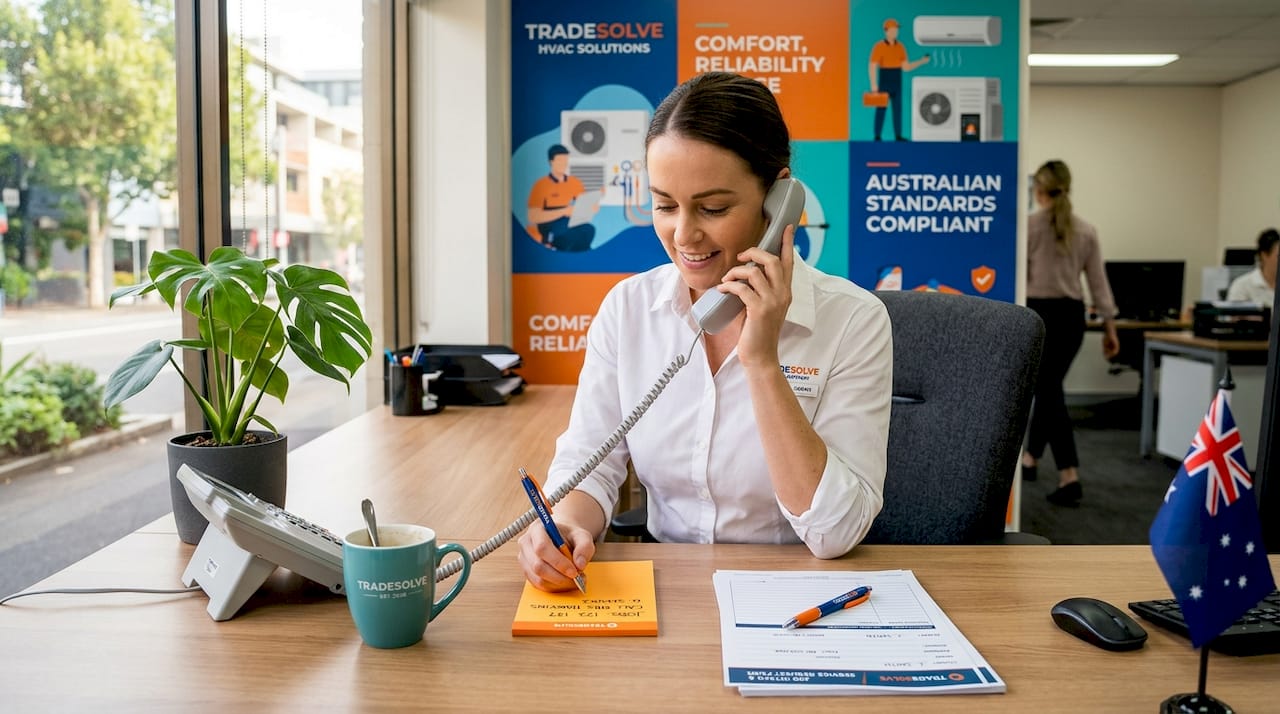
Examples of professional trade receptionist services
You’re on the tools, it’s 38 degrees, and your phone rings off the hook. You miss three calls before lunch. Two of those callers ring a competitor who picks up straight away. That’s the daily reality for trade businesses without proper receptionist support, and it costs more than just a few bookings. Understanding the full range of examples of professional trade receptionist services helps you pick the right fit, whether you run an HVAC business, a plumbing operation, an electrical firm, or a fencing company.
Table of Contents
Key takeaways
What to look for in a professional trade receptionist service
7 examples of professional trade receptionist services
Comparing trade receptionist service types
How to choose the right receptionist service for your trade business
Best practices for working with a trade receptionist
My take on trade receptionists after working with hundreds of trade businesses
How Servicemagnet’s AI receptionist works for Australian trades
FAQ
Key takeaways
Point | Details |
|---|---|
Trade-specific intake matters | Generic answering services miss critical details like urgency, warranty status, and equipment type that trades need. |
AI receptionists offer 24/7 coverage | AI virtual receptionists book directly into scheduling software and escalate emergencies around the clock. |
Direct booking saves dispatcher time | Services that book appointments directly reduce workload compared to message-only options requiring callbacks. |
Cost varies significantly by type | In-house receptionists cost the most; AI options deliver strong ROI at a fraction of the price. |
Best practices drive real results | Clear scripts, regular feedback, and CRM access are what separate average from excellent receptionist outcomes. |
What to look for in a professional trade receptionist service
Not all receptionist services are built the same. For a trade business, the wrong choice adds friction rather than removing it. Here is a practical framework to guide your evaluation.
Trade-specific intake capability. Can the receptionist capture urgency level, equipment type, warranty status, and preferred scheduling windows? Structured intake questions are what separate a trade-ready service from a generic one.
Direct booking integration. Does the service book straight into your scheduling platform, such as ServiceTitan, Jobber, or HouseCall Pro? Services that only send message summaries push extra work onto your dispatcher.
Coverage hours and scalability. After-hours calls are where most trade businesses haemorrhage leads. Check whether the service covers nights, weekends, and peak season surges.
Communication channels covered. Modern receptionist services handle more than calls. Look for SMS, email, and web chat capability where relevant to your customers.
CRM updates and data hygiene. A good receptionist logs every interaction accurately. Patchy data creates downstream problems for your whole operation.
Cost versus expected return. Weigh monthly fees against the value of each booked job. One captured emergency call can pay for a month of service.
Pro Tip: Ask any shortlisted service to walk you through exactly how they handle an urgent after-hours call for your trade. Their answer tells you more than any brochure.
7 examples of professional trade receptionist services
1. In-house receptionists
The traditional model. You hire a full-time or part-time staff member who sits at the front desk, answers phones, greets walk-ins, and manages your calendar. Their professional receptionist duties cover face-to-face greeting, call routing, enquiry handling, and administrative tasks. The advantage is full control and deep familiarity with your business. The downside is cost, typically $55,000 to $75,000 per year in Australia when you factor in super, leave entitlements, and office overhead. Coverage also drops the moment they are sick, on leave, or off the clock.
2. Human virtual receptionists (script-based)
A remote team answers your calls using scripts tailored to your business. They introduce themselves as part of your company, gather caller details, and send you a summary via SMS or email. Human virtual receptionist services cost between $200 and $800 per month. The trade-off is that they typically do not book directly into your scheduling platform. Your dispatcher still needs to follow up and complete the booking. For high-volume trade businesses, that lag adds up fast.
3. AI virtual receptionists
AI-powered voice agents answer every call instantly, at any hour. They qualify the caller, capture job details, and book directly into your scheduling software in real time. AI virtual receptionists typically cost $300 to $600 per month, integrate with ServiceTitan, Jobber, and HouseCall Pro, and handle unlimited simultaneous calls without fatigue or sick days. Emergency escalation is built in, routing urgent calls to an on-call tech immediately. For trade businesses that get hit with a surge of calls during a summer heatwave or a storm, this model keeps every lead captured.
4. Hybrid human and AI models
Some providers combine AI handling for routine enquiries and bookings with human agents stepping in for complex or sensitive calls. The AI handles the volume; a trained person handles the nuance. This gives you cost efficiency without sacrificing customer experience on difficult calls. It is a strong fit for larger trade businesses with diverse service types, such as a company running both HVAC maintenance contracts and emergency plumbing callouts. The setup requires clear escalation rules so handoffs feel smooth to the caller.
5. Specialist HVAC virtual receptionists
HVAC-specific receptionists understand the difference between a split system installation enquiry and a broken heater in the middle of winter. They ask the right intake questions: system age, refrigerant type, warranty cover, and whether there are elderly or young children in the home. HVAC virtual receptionist services handle up to 70% of office workload, covering scheduling, dispatch coordination, CRM updates, and even invoice follow-up. If you run an HVAC business, a generalist answering service will always leave gaps that a specialist fills without thinking twice. You can read more about this at Servicemagnet’s HVAC receptionist guide.
6. Plumbing and electrical trade receptionists
Plumbing and electrical businesses deal with a high proportion of urgent calls. A burst pipe at 11pm or a tripped safety switch with no power to a commercial kitchen cannot wait until morning. Receptionist services tailored for these trades are trained to recognise safety urgency, ask about the property type and access, and route urgent calls to the right technician immediately. They also handle routine quote requests and maintenance bookings during business hours without tying up your team. Servicemagnet has a dedicated look at this for plumbers and electricians if you want trade-specific detail.
7. Fencing and general trade receptionist services
Fencing, landscaping, and general building trades tend to have longer sales cycles with more enquiry calls than emergency calls. The receptionist role here shifts toward lead qualification, quote scheduling, and follow-up coordination. Converting fencing phone enquiries to booked appointments is where a skilled receptionist earns their keep. They gather job scope, location, material preferences, and urgency before booking a site visit. Without this intake step, your estimator rolls up to a job with half the information they need.
Comparing trade receptionist service types
Service type | Availability | Direct booking | Trade-specific intake | Approx. monthly cost |
|---|---|---|---|---|
In-house receptionist | Business hours only | Yes | Depends on training | $4,500+ |
Human virtual receptionist | Extended hours | Rarely | Partial, script-based | $200 to $800 |
AI virtual receptionist | 24/7, unlimited calls | Yes, real-time | Yes, configurable | $300 to $600 |
Hybrid human and AI | 24/7 | Yes, with escalation | Yes, layered | $400 to $900 |
Specialist trade receptionist | Extended hours | Varies | High, trade-trained | $500 to $1,200 |
The numbers above reflect general market ranges. Your actual cost will depend on call volume, service scope, and the level of trade customisation required.
How to choose the right receptionist service for your trade business
Getting this decision right means being honest about your current gaps. Ask yourself a few direct questions before you commit.
What is your average daily call volume, and when do most calls come in? If you get slammed between 7am and 9am when you’re on site, you need someone covering that window reliably.
How many leads are you currently missing after hours? Most trades businesses are surprised when they audit their missed calls. Even two missed emergency calls per week at $500 a job adds up to $52,000 in potential revenue per year.
Does your scheduling platform support integration? If you run ServiceTitan or Jobber, prioritise services with direct scheduling integration so bookings happen without a middle step.
What is your budget, and what is a booked job worth? Calculate the break-even point. If a booked job is worth $400 on average and a receptionist service costs $500 per month, you only need two additional bookings to cover the cost.
Do you need trade-specialised intake or will general call answering do? Without the right intake taxonomy, outsourced receptionist services can actually increase dispatcher workload by sending incomplete information.
Pro Tip: Start with a one-month trial of your shortlisted service and track every call outcome. The data from that month tells you exactly what you are getting for your money.
Best practices for working with a trade receptionist
Once you have chosen a service, the work is not done. How you set up and manage the relationship determines whether you get average results or genuinely strong ones.
Write clear call scripts upfront. Include how to greet callers, what questions to ask for each service type, and what counts as an emergency. Vague guidance produces vague outcomes.
Define your escalation protocols. Who gets called for a gas leak at midnight? What is the difference between urgent and non-urgent? Put it in writing before the service goes live.
Give the receptionist access to live schedules. A receptionist booking from a stale calendar creates double-bookings and customer frustration. Real-time schedule access is non-negotiable.
Review call recordings and summaries weekly. Early on, this is where you catch gaps in scripts or intake questions. It also helps you spot patterns in what customers are actually asking.
Train on trade terminology. Receptionists familiar with trade-specific language deliver higher quality experiences and make fewer routing errors. A receptionist who knows what a ductwork inspection involves will ask better questions than one who has never heard the term.
Keep your CRM updated and ask the receptionist to do the same. Clean data is the backbone of good customer communication. If the receptionist is logging incomplete records, fix it fast.
My take on trade receptionists after working with hundreds of trade businesses
I’ve spent years watching trade businesses wrestle with this decision, and the same mistake comes up again and again. Businesses chase the cheapest call answering option and then wonder why their dispatcher is constantly chasing incomplete enquiries and rebooking jobs that fell through the cracks.
The real cost of a bad receptionist setup is not the monthly fee. It is the jobs that never get booked, the customers who ring off when they hit voicemail, and the technicians sent to jobs with missing information. That is where the money bleeds out, quietly, every single week.
What I’ve seen work is matching the receptionist type to the actual nature of your calls. Emergency-heavy trades like plumbing and electrical need 24/7 AI or hybrid coverage with live escalation. Project-oriented trades like fencing and landscaping benefit more from skilled lead qualification and quote scheduling. One size does not fit all, and pretending it does is an expensive habit.
The businesses that get the best return treat their receptionist service as an extension of their team, not a black box they signed up for and forgot about. Regular reviews, clear scripts, and shared schedules are what separate a $600-a-month win from a $600-a-month disappointment. The AI and human combination is where I see the most consistent results for growing trade businesses right now.
— Service
How Servicemagnet’s AI receptionist works for Australian trades
If you have read this far and recognised your business in any of these scenarios, Servicemagnet’s AI receptionist is worth a serious look.
Servicemagnet provides AI voice agents for Australian trades that answer every call, 24 hours a day, 7 days a week. No voicemail. No missed leads. The AI qualifies callers, books appointments directly into your scheduling software, and escalates genuine emergencies to your on-call tech immediately. It handles HVAC, plumbing, electrical, fencing, and general trades with configurable intake scripts built for each service type. AI receptionists deliver positive ROI often within the first week, at a fraction of what an in-house receptionist costs. If you want to stop losing jobs to voicemail and start capturing every lead your marketing works hard to generate, Servicemagnet is built exactly for that.
FAQ
What are examples of professional trade receptionist services?
Examples include in-house receptionists, human virtual receptionists, AI virtual receptionists, hybrid models, and specialist trade receptionists for HVAC, plumbing, electrical, and fencing businesses. Each model differs in availability, booking capability, and trade-specific knowledge.
What does a trade receptionist do differently from a general one?
A trade receptionist captures job-specific intake details like urgency, equipment type, and warranty status, then routes or books accordingly. Generic receptionists often miss these details, which increases dispatcher workload and slows response times.
How much does a virtual trade receptionist cost in Australia?
Human virtual receptionist services typically cost $200 to $800 per month, while AI virtual receptionists generally range from $300 to $600 per month. In-house receptionists cost significantly more when you include salary, super, and leave.
How do I hire a trade receptionist that fits my business?
Start by auditing your call volume, peak call times, and current missed call rate. Then assess whether you need direct booking integration, trade-specific intake, or after-hours coverage, and match those requirements to the service types available.
Do AI receptionists work for all trade types?
Yes. AI receptionists can be configured with trade-specific scripts for HVAC, plumbing, electrical, fencing, and other trades. They handle intake questions, book appointments, and escalate emergencies based on rules you set for your business.